2024 Scholarship Recipients
Geoff S.
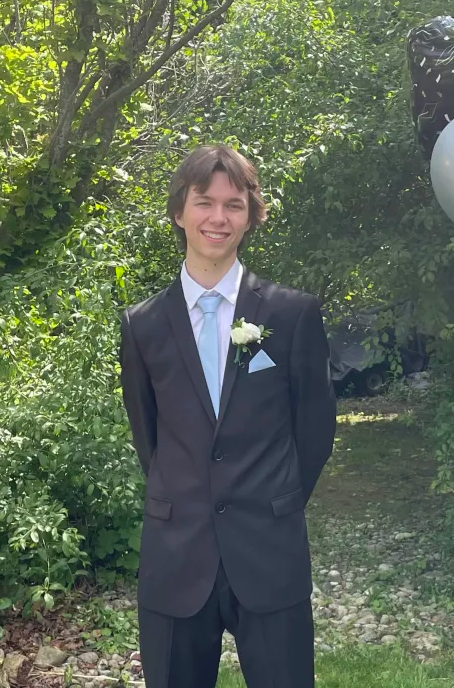 While I have experienced many losses in my life, the most significant loss was the death of my sister Kathryn in April 2022. During her 14 year battle with cancer, she and I spent a lot of time together both in the hospital and at home. I spent a year living with my grandparents while she had to remain in the hospital and I could not stay with her or my parents. I developed a very close relationship with my grandparents and basically became another child to my aunt. While my sister was battling cancer for the first time, my aunt was diagnosed with advanced breast cancer. Sadly she passed away after a 3 ½ year battle. My parents were patient and provided me with constant reassurance, love and support.
Watching Kathryn I learned what it meant to be strong and to make the best of whatever situation you are in. I learned how to be strong, how to love fiercely and to be kind. Even in her worst days she was always so loving and kind to me. No matter how bad her day was or what news she had received she always asked how I was doing and truly cared about me and what was happening in my life. Throughout the next decade, my relationship with my sister grew stronger. Even when she could have gone out with friends she chose to spend her time with me. She always made spending time with me one of her priorities.
The spring and summer of 2022 was very difficult for me. My parents and I were with my sister when she died. Later that summer, my grandfather, who had taken care of me for that year when I was so young, passed away. It was a very difficult time for our family.
My resilience has been learned from the amazing example that Kathryn provided but also what I witnessed in my parents. They have a very strong relationship and have included me in their laughter and tears. While I deeply miss Kathryn, I have become stronger and more resilent. I am living my life to the fullest and pursuing my dreams as I know that is what she would have wanted. As Kathryn always told me, I am choosing “to smile because she lived not cry because she died”.
I am enrolled for full time studies in the the LIfe Science program at McMaster University. Once I have completed my undergrad, my dream is to work in the medical field either as a doctor or medical researcher.
Michael M.
 When I was 14, my mom was diagnosed with stage IV breast cancer. Less than a year after her diagnosis, she passed away. Losing my mom at such a young age was incredibly difficult for me. As an only child, my mom was my support person and was always there to guide me when I needed it. She would always radiate positivity with her contagious laugh and smile.
After her passing, I did not know what to do. It was in the middle of the COVID-19 pandemic, and I could only see a few people safely. I turned to my father who offered his support and was able to share his experiences with grief. I also turned to my Nonna and Nonno, my grandparents on my mom’s side, who would often share positive memories about my mom. This made me appreciate the amazing woman she truly was.
In addition to connecting with close family, I also sought support from a psychiatrist. I was initially frightened to attend therapy and open up about such a tragic event in my life. However, after my first session, I learned that being vulnerable with someone can be incredibly rewarding. Having someone listen to my struggles and advise me on how I can navigate the challenges of losing my mother was instrumental to my personal growth. The biggest thing I learned from my psychiatrist is that grief is not a linear process. There is no right or wrong way of grieving. Learning to reflect upon positive memories and understanding that being not okay sometimes is perfectly acceptable were valuable takeaways.
In my final two years of high school, I joined many extracurricular activities and met many new friends who have been amazingly supportive. One of the extracurricular activities I joined was to become my school’s head morning announcer. I adored this role, as I could share my personality with the entire school and bring positivity to everyone in the morning.
I know my mom would have been very proud of me for becoming my school’s head announcer as she always encouraged me to use my voice. One of the fondest childhood memories I have is sitting down and watching the six o’clock news alongside my mom. It was our family tradition to watch the news every night together and discuss the happenings in the world.
I always knew I loved journalism and wanted to be a broadcaster one day. Currently, I am entering my second year of Carleton University’s Bachelor of Journalism program to pursue my dream of becoming a journalist.
My dream is to be on the news someday and help people make better sense of their world. I hope a kid will create memories with their mom by watching the news, just like I did with mine.
Madelynn H.
 In November of 2022, I lost my mother Allison, suddenly, to an overdose. I was in my second year of university, studying full time in biochemistry. Despite the prevalence of overdose in our society, addiction and overdose are so very stigmatized, and thus I found the grief to be especially difficult. The grief started as an isolating pain, but as I found a community in this loss, by means of support groups and counselling, I’ve learned to appreciate my grief. The grief that I am experiencing shows that my mother was loved, and continues to be loved by me; this grief is all the unexpressed love that I will forever have for her. Every time I feel heartbroken thinking about her death, I am now also hit with a wave of happiness. I feel fortunate to have been loved so deeply that I experience this intense grief, and I find solace in the thought that as long as I am grieving, she is never truly gone.
In the last few years I have found a great deal of peace and understanding by volunteering with an organization called NaloxHome. We educate youth and schools in Vancouver about overdose, addiction, and harm reduction. I’ve found that educating others about overdose and addiction has allowed my grief to be expressed in new ways. If even one person learns how to prevent an overdose or understands the nature of addiction, my mom’s legacy can live on. I’ve found an unwavering community in this organization and love being able to support others, where my mom lacked that support. One major facet of addiction is the stigma attached to it. In hopes of coping with this, I turned to counselling and support groups for those grieving overdose-related deaths. In this community, I’ve realized that the complicated grief that comes from addiction doesn’t have to be isolating and scary. So many people are experiencing this grief and it’s so important that it is talked about. I’m lucky to have been able to talk about my mom in this non-judgmental space, and I am glad that others now know the real Allison, despite it being after her passing.
Since her passing, I’ve found a new motivation to excel in school, as although she won’t be here to see me graduate university and continue in graduate studies, she has always encouraged me to pursue what I love and excel in it. I have come so far, from hiding from grief to embracing it, and it is so very important to me that I continue pushing towards my goals. I plan this year to finish my Bachelors degree in Biochemistry at Simon Fraser University and go on next year to get my doctorate in Pharmacy. Now, when I am asked about my mother’s passing, I am no longer ashamed to admit that it was an overdose, but I always make sure to emphasize that although she was an addict, she was also a million other things; my best friend, a selfless mother, an amazing singer, a lover of lemon meringue pie and Yorkshire puddings, an unconditional supporter, and countless other qualities that I cannot even begin to describe.
Amanda H.
 My Resilience Story (Abbreviated) I had an extremely close bond with my parents throughout my childhood. Unfortunately, tragedy struck when I had to endure both of their losses. My mother passed away due to a rare type of breast cancer in 2015, and my father passed away from a lengthy illness in 2019. Losing not one, but both of my parents devastated me. I was only 8 years old when my mother died so it took a large toll on my mental health. However, I eventually started my journey of resilience. My family was the main reason why I was able to continue to live life to the fullest. I would often go on walks with my father, sister, and dog because it was very therapeutic to me. It gave me a chance to really connect with the environment around me and remember the amazing memories I had with my whole family. I would also frequently write my feelings down in a journal, as well as the memories I had with my mother. Reflecting on my emotions each day led me to improve my mental health and start socializing with my peers again. Unfortunately, my father obtained an intense illness as soon as I started to demonstrate a sense of resilience from the loss of my mother. He was hospitalized which was traumatizing, especially because he was unresponsive whenever I tried to talk to him. Later, I found out that my father would be in the hospital permanently, which meant that I needed to move in with my current guardians. This was a stressful process for me, especially considering I had to give away my dog who provided me with comfort during my struggles. Consistent hospital visits with my father lasted about 3 years, but my father died when I was 12 years old. I never thought I would be able to stay resilient after these difficult losses, but somehow I did. This was mainly because I started to focus on my passion for dance. It was one of the only things that allowed me to express my emotions in an artistic way. The expression and community that my dance studio provided me with was a way for me to finally acquire a sense of happiness. It is overall what helped me to get through the grieving process, and ultimately demonstrate resilience. Next year I am going to York University for their dance program in order to pursue my passion for dance in a future career. It is still one of the only things that truly speaks to me, and I want to share it with the world. Over everything else, I want my story to inspire others to keep going even when it gets difficult because it is always worth it in the end.
Sage S.
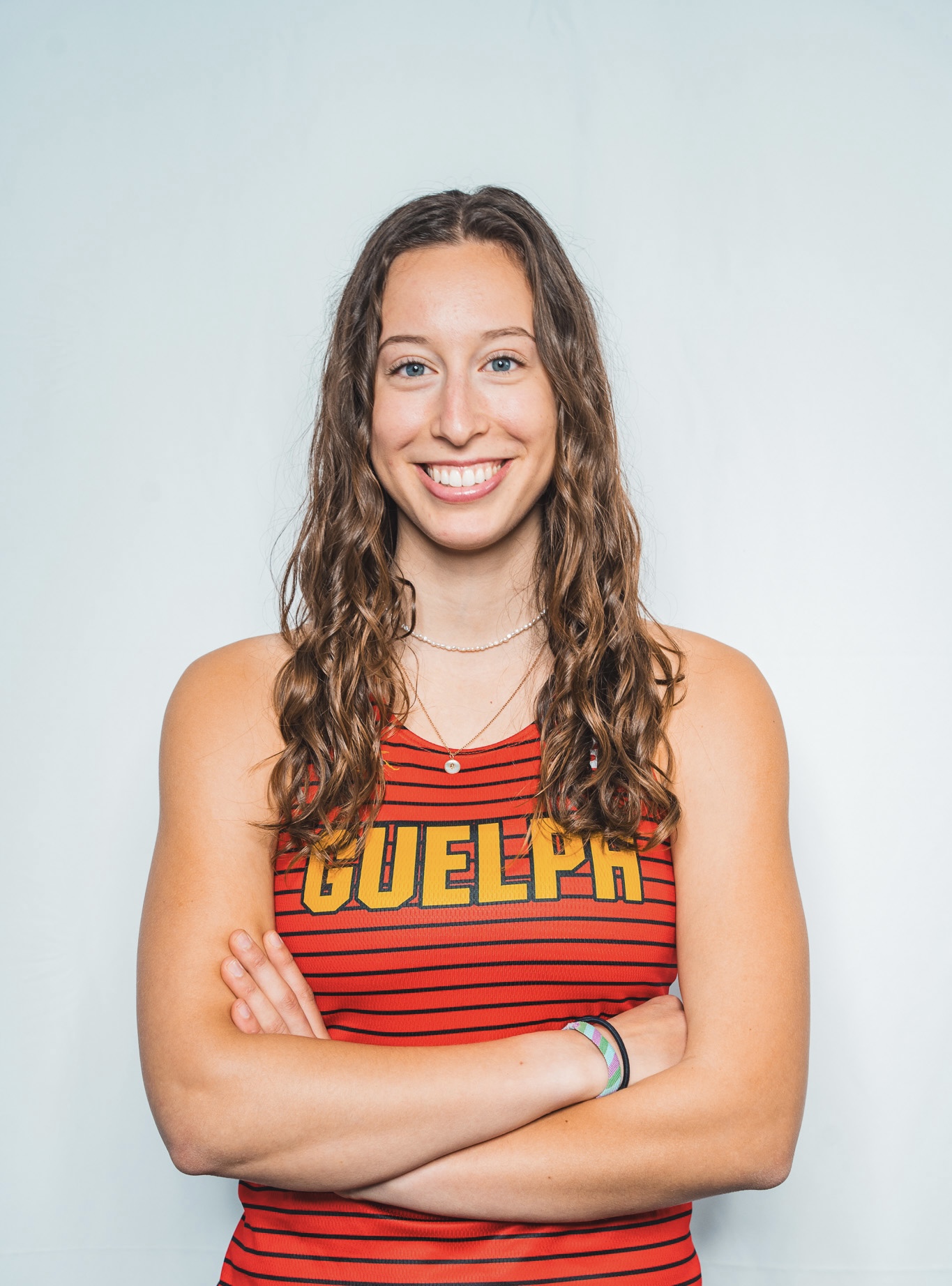 Grief, unlike most things in life, has no timeline. It changes your life indefinitely and is a constant presence from the moment a loved one passes until the end of our own lives. It brings waves of sadness, anger, guilt, and so much more. From my sister’s passing, I’ve learned that it is how we choose to respond and continue living our lives that truly reflects our love for them and our inner strength.
From a young age I had been exposed to grief, attending many funerals before I was 12. However, never in a million years could I have prepared myself for the loss of my sister, Emerson, who was 17 years old. This loss undeniably changed my life forever.
As the youngest of three siblings, I looked up to my brother, Kieran, and sister, Emerson, from before I can remember. Emerson and I became very close growing up as we shared a room, had countless late nights staying up laughing, reading each other quotes, and my favourite of all, having dance parties. Emerson was not just my built-in best friend, but someone I expected to be by my side for all of life’s ups and downs.
On February 3, 2019 she passed away unexpectedly. I struggled to accept there was no explanation for my sister’s death and occasionally ponder this idea. However, with lots of time I have learned that we have to accept some things can never be explained or changed. She is gone.
The first few years following my sister’s passing, I gained a sense of motivation to live my life for my sister. However, it wasn’t until a depressive episode four years after she passed that she would change my outlook on life. After support from a counsellor, I came to realize I could not live my life as people expected of me. And with lots of reflection, I came to see how my sister lived the most unapologetic life and that she would want the same for me. This gave me the courage to transfer universities and put myself in an environment that would help foster success and happiness. This new environment also allowed me to see the importance of having friends and family who experienced Emerson’s loss in close proximity.
Over the years family, friends and I have organized a community hockey game, sweater drive, done lantern and balloon releases, and unveiled a memorial bench for Emerson. Though these events bring about many emotions, they are a beautiful way to remember, talk about, and honour Emerson’s life.
Five and a half years later, I still have waves of sadness and many other emotions that I know will continue throughout my life. But I hope I can use my experience and knowledge of loss to support others who have their own unique stories.
Though I hope to live an incredibly long and fulfilling life, I now appreciate every day and moment for itself. I live each day as though it is my last, because the only thing we can guarantee is today, right now, this moment. So, take every moment you can to be happy, to embrace the beauty of this world, and to be unapologetically yourself.
I look forward to entering my third year of Biomedical Engineering at the University of Guelph this fall in hopes of one day working in paedeatric medicine with fellow engineers and doctors to reduce paedeatric mortality.
McKenna M.
 In December of 2020 when I was in grade 9, my Mom was diagnosed with breast cancer. The cancer was quickly found to be triple-negative and the treatments were unable to slow the growth of the tumor. With the ineffective treatments the cancer progressed quickly and my Mom died in April 2021, four months after her diagnosis. With the cancer progressing quickly, I never told any of my friends about the diagnosis because every time I processed new updates, the cancer had gotten worse. When she died it was hard to open up to friends about the death because until then, they all thought everything was fine. Although it was challenging to return to school shortly following the death, I knew it would be good for me to return to a social setting and a daily routine. When returning, I was supported by family, friends, and more. They made sure I wasn’t putting too much pressure on myself and that there was nothing wrong with needing to take a break. Grade 10 was the first “normal” year since covid. This was bittersweet as I got to try new things and meet new people, but it also felt weird as it was the first first-day of school that my Mom was not there. I did many activities, returning to activities I loved like lacrosse and hockey but I also tried many new activities like rugby, swimming, and band. I also invested in academics, taking French immersion, advanced courses, and several grade 11 courses a year early. Most of my time was consumed by sports, clubs, school, and hanging out with friends, but I also made sure to acknowledge my grief. I attended group counseling sessions at Lighthouse For Grieving Children. At Lighthouse I met lots of teens who also experienced a significant death. Through Lighthouse I found Camp Erin, a sleepover camp for children who have experienced a significant death. In 2022, my sisters and I attended Camp Erin. I got to meet more teens who all had a significant death, coincidentally, everyone in my cabin also had a parent who died from cancer. I formed strong bonds with all my cabin mates who I still talk to today! Camp is a one-time opportunity so that as many children as possible can have this amazing opportunity. With this, my sister and I began talking to our counselors about the possibility of returning as a junior counselor. After camp, we worked with camp coordinators to develop a Mentors with Lived Experience program allowing past campers between the ages of 16-18 to return as mentors for younger campers. Attending camp as an MLE for the past two years has been lots of fun and has given me the opportunity to give back to the community that helped me so much. Since my Mom’s death, I have continued to partake in many extracurriculars, sports, academics, as well as spending lots of time with friends and family. I also take time to reflect on my grief and how it changes as life goes on especially with major milestones like prom, graduation, leaving for university, and more. I look forward to attending the University of Guelph for Biomedical Engineering this fall. Following my undergraduate degree I intend to complete a master’s degree in biomedical engineering and further study medical imaging or prosthetics to combine my love for creating and designing with helping people with medical advances.
Victoria M.
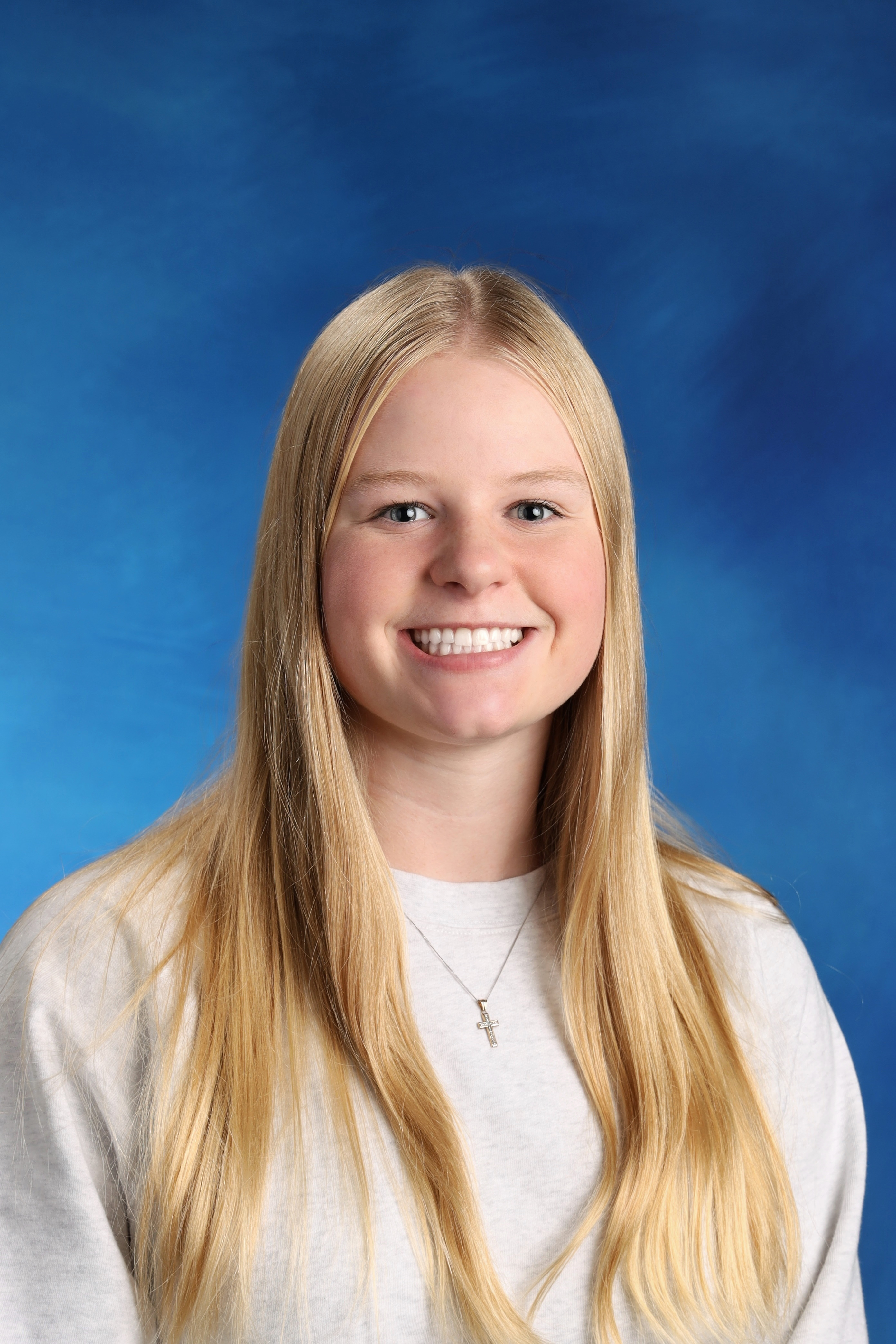 You never think it will happen to you, until it does. Having someone who you love die that is. Unfortunately it happens to all of us eventually, for some of us sooner than others. That was the case for me.
In December 2020, when I was 14 years old, my Mom was diagnosed with breast cancer. This was something that no one in my family saw coming. The cancer was metastatic and triple negative, so it spread very quickly and 4 short months later on April 2nd, 2021 she died. She was the most amazing Mother to myself and my 2 sisters (1 twin, 1 younger).
This has and continues to have a large negative impact on my family and I. However, I know that my Mom would want me to keep living a happy life and to achieve my full potential. That is exactly what I have strived to do these past 3 years since she died. Especially by continuing to play sports and focus on school. Being a teenager is hard enough, but being a teenager who is grieving such a significant loss is even harder. There were many times when I thought to myself “this is so difficult, maybe I should just give up, quit sports, let my grades slip, etc”, but that is not what I wanted for myself or what my mom wanted for me either. So I made the choice to keep pursuing my goals and trying to do what I know would make my Mom proud.
Another way that I have made the choice to find resilience during my grieving process has been by volunteering as a Mentor at a children’s grief camp. Before becoming a Mentor, I was a camper. In summer 2022, one year after my Mom had died, I attended a “grief camp” called Camp Erin for Grieving Children. Teens and kids who have lost someone significant to them can attend this non-profit camp. I wasn’t excited at first, but once I met the other 6 teen girls in my cabin my opinion completely changed. Each one of them had also lost a Mom or Dad, all to cancer. That’s when I realized the impact that Camp Erin would have on me. To help as many kids as possible, you can only attend camp once, and to be a counselor you have to be 18. I knew I wanted to make a difference before then. With the help of the amazing camp directors and my twin sister, I helped to start the “Mentors With Lived Experience” (MLE) program (ages 16+). My role as an MLE is to be a positive role model for campers on how to carry grief and have a happy life despite grieving. In the summer of 2023 I attended camp again, but this time as a Mentor! It was an incredible experience getting to help young kids who are also grieving a significant loss. I went back this past summer (2024) as a MLE again and I look forward to returning in summer 2025 but as a full “Cabin Buddy ” as I will be 18 then.
I truly believe that when you help others, you help yourself. Being able to use the tragic loss of my Mom to help other kids in the same situation has been life-changing.
I look forward to attending Queen’s University where I will be completing a BSc in Kinesiology with future plans of working in Medicine or in Business. I am also heading into Queen’s as a recruit for the Women’s Varsity Field Lacrosse Team and I plan on playing Field Lacrosse throughout my time at Queen’s.
Bridget Claire C.
 Grief is hard. Hard and weird. It’s a lot for anyone, but especially a teen.
Some days I don’t think of my father at all. Maybe because I’m too busy, maybe because my conscience convinces me that I don’t miss him enough, or maybe because I want to protect myself from all of the hurt that losing him has caused. Other days, he is the first thing I think of when I wake up and I want to scream from the rooftops about how angry I am without him here.
I lost my dad on Monday, May 29th, 2023, two days after my 17th birthday. This was the last day of a very long, very challenging battle with a cancer so rare, he was one of only 254 other patients in the world;16 of those considered high grade like him. My dad passed at home, in his own bed just as he wanted. I’ve never held someone’s hand so tightly before; I never wanted to let go.
While this grief has been the most all encompassing grief experience I have ever had, sadly my father was not the first person that I have lost. At age nine my maternal grandfather passed due to Chronic Obstructive Pulmonary Disease (COPD), and at age 13 I lost my paternal grandfather to Huntington’s Disease. From the very beginning of adolescence, all of the men in my life that were supposed to guide and protect me, have been agonisingly ripped away from my everyday life. And all in a visibly horrifying way. But one thing all of those men had in common was resiliency. And I’m grateful and thankful that it’s something my parents fostered in me, that I have seen in them and that I work on creating and living a life of everyday.
I choose to be resilient because my father was the most resilient person I’ve ever known. Doctors, nurses, and other healthcare professionals from all over the world called him things like, ‘Pioneer’, ‘Superman’, and a ‘Magical Unicorn’. With a cancer so rare, he had to fight for access to treatment that was rare. Clinical trials, genetic tests, pharmaceuticals used off label, my father tried it all. He could have followed a standard of care process and lived six months, but instead, he thrust himself into becoming a face of new-age medicine and lived for three years. He did this all while continuing to work, do his fatherly tasks, and take a weekly flight from Nova Scotia to Toronto, for cancer treatment, leaving at 5:00 a.m., and returning the same day at 11:55 p.m., before then getting up to be at work the next day for 8:00 a.m. If my dad could handle all of that, on top of being in pain, I think that I can make it through the rest of my days carrying the pain of his absence.
I am excruciatingly my fathers daughter. Hard work, discipline, and routine are practically built into the fibre of my being. I don’t have it in me to not be resilient because my parents raised me this way. After dad passed, I took a week away from school but soon realised I needed the normalcy of my everyday routine to help me get through the day. Going back to class was tough – I felt like everyone was staring at me, but my friends and teachers were great supports, and gave me space or comfort just when I needed it.
I would not have been able to make it through this past year without the endless support of my family, namely my mother – Monique, and my paternal grandmother – Heather. I’ve also found great support through grief therapy. Looking after my mental and emotional health is as important to me, if not more, as looking after my physical health. It allows me to function at my best and has given me even more appreciation and understanding for what others may be going through.
School has always been important to me. I like to stay involved, and give back in kindness to my school and community in any way I can. I am a proud member of my school’s Gives for Good and Environmental Clubs. A frequent participant in Nova Scotia Secondary Student Association (NSSSA) leadership conferences in my province of Nova Scotia, and Cape Breton Victoria (CBV) region. Though my favourite role has been as lead ambassador for the international students at my high school through the Nova Scotia International Student Program (NSISP). I’ve been a part of this program for three years and have met the most incredible people from all over the world. I have taught highland dance at a small dance school in our community for the last four years as an assistant dance teacher, and have worked part-time at a local boutique, for the last two years (on weekends and during the summer months). I maintain these roles all while still being your average grade 12 French Immersion student (with honours), and being a teen girl grieving her dad. I show my resilience by getting up every day, going to class, participating in life, and by continuing to give back to the people and organisations that I care about, because they fill my bucket, allow me to forget for awhile, and just make me feel good about what I am doing and where I am going.
And to that end, this fall I will be leaving this beautiful island of Cape Breton, Nova Scotia and heading to the city to attend Toronto Metropolitan University for a Bachelor’s Degree in Design, with a major in Fashion. My dad always supported my dreams of studying fashion post-secondary, even from the very beginning of high school. He would be very proud that I have been resilient this past year and successful in following my dreams.
Siobhan T.
My whole life I had a very constant, typical and active childhood however, in 2016 my whole world came crashing down when my 8 year old brother Tiernan was diagnosed with NUT midline carcinoma. My brother was the kindest, most genuine and friendliest person. He was the type of kid anyone could be friends with. My life did a complete 360 after his diagnosis, and it was extremely hard for my 9 year old self to comprehend. My brother was my built-in best friend, and after his 3 and a half month long battle with cancer I can remember being so mad at the world. I remember thinking how could this have happened to me?
Initially, after my brother’s passing I tried to repress all the memories, as most people do when grieving since it is so painful. However, one day there was a switch within me, it was very hard at first but I started to shift my outlook from “why can’t Tiernan be here right now,” to “Tiernan would love this.” This small but meaningful action was one of my ways of cherishing and honoring my brother’s memory. While my brother’s life was short, it deserves to be celebrated, and talked about. After my brother’s passing I got involved with a local charity connecting me with other kids who have lost a sibling or who have a sibling battling cancer. This was very difficult for me at first, as talking about grief can be very vulnerable, but it helped me to realize that there are so many people out there who understand what I’m going through and are willing to listen. I love hearing other people’s stories and I am honoured to be able to share a part of mine here.
The loss of my brother changed my perspective on life. Now I try to take advantage of every opportunity possible, as I have seen just how quickly life can change. I try to say yes, as much as possible and I know this is what my brother would want. I have a greater appreciation for all the little things in my life, and have a new profound look at all my relationships. “Sometimes you will never know the value of a moment until it becomes a memory.” (Dr.Suess) Looking back it was hard to realize the magnitude of my community’s actions as I was so young but now that I’m older I am able to fully understand. While I will never be able to fully get over the loss of my brother, I have realized that grief is a learning journey and I am learning something new about myself and this process everyday.
Throughout this journey I found solace in sports, specifically soccer. Soccer is something that my brother and I both loved. I am fortunate enough to have the opportunity to play competitively, and when I play I feel as though he is watching down upon me cheering me on. Resilience to me does not have to be large, monumental actions, I believe resilience is anytime I have continued with my daily routine, even on my darkest days. Life will always continue, and doesn’t stop for you. I believe that there is always hope, and beauty to be found in everyday things. Even though my brother isn’t here with me physically I know he is still present in his own way.
My long term goal is to be a business owner that is able to give back to my community like they did for my family and I. I am looking forward to attending the University of Victoria and am planning on completing an Undergraduate degree in Business. I am extremely grateful for all the help I have received from my family, friends and anyone who has been a part of my grieving journey.
2023 Scholarship Recipients
Autumn R.
 I am the youngest girl from a family of sixteen children. I grew up on the Tobique First Nation whose ancestral land is in New Brunswick. I was raised by my mother and stepfather. Both sides of my family have been a big part of my life! Life in the beginning was so calm, and never chaotic until my first experience with loss. My maternal grandfather who was my best friend when I was young sadly passed while I was at the tender age of nine. This was the beginning of a cascade of losses and adversities that had starting progressing, like a tumbling row of dominoes. After the loss of my grandfather, my older sister was diagnosed with cancer and she had a long and powerful fight but sadly passed. Next, my grandmother and grandfather (on my stepfather’s side of the family), and then came my niece who got diagnosed with brain cancer, and just recently the diagnosis of aggressive dementia in my maternal grandmother. Life on my First Nation can be difficult. Sadly, it is a place where funerals are a lot more common than weddings. I have found that a lot of the people around me cope with their grief through the negative coping strategies of partying, ignoring, alienation, alcohol and drugs. I did not fully recognize how much grief and trauma I was carrying until I attended a funeral service for my friend’s niece. At this service, I found myself crying uncontrollably and questioned why I had not done this before when attending my own family members’ burial services. It was through personal self-reflection that I realized I had not processed all the tremendous losses that I experienced since the age of 9. I realized that no one ever told me that if you do not deal with loss that it will have an overwhelming hold on you. I have learned that it is common for our brains to suppress these experiences to protect us, but that you must confront your losses before you can move forward. Healing and time do help but it has been my experience that I will always hurt from missing them, just a little less as time passes. I have come to the point in my young life where I can acknowledge how challenging my losses have been and I am also grateful that they have each contributed to who I am today.
I am looking forward to attending Holland College in the fall in the Pastry Arts Program. I will be going to learn about one thing I’ve experienced that can help an aching heart. I’m going to feed people and make them smile. When I complete my program, I hope to share my passion for food and teach my new skills to vulnerable members of my community.
Chukwufumnaya O.
 I was fortunate to grow up in a very supportive and loving home environment. I know people often look to the virtual world to find and adore their superheroes, whereas I was fortunate to share my home with mine. My mother instilled in me and my siblings the lesson that we can advance without boundaries and that adversity can be conquered. My mom has and will always be my superhero. She provided me with a motivating example of how to live life and make sensible decisions, even in the most uncertain circumstances.
Sadly, my superhero passed in 2021 from cancer. As I turned 16, I felt numb and exhausted from the tumultuous jumble of emotions. Upon the passing of my mom, I felt all my goals and dreams for my life instantly disappeared. When you are young, you have the impression that your parents will always be there. You don’t think about the death of your parents because they’re “home” and “security”. After my mother passed away, grief became a trial/threshold that I couldn’t overcome.
At my mother’s burial service, I frequently heard the phrase, “time cures all wounds” but I wish I had known that grieving time does not function the same as regular time. I felt the past completely hid the present during the first year. I was eventually able to feel more grounded in the present as I found productive coping strategies. I began to recognize that my past hurts don’t have to dictate how I feel. This is the agreement we make as people, “to know the sunshine we need to experience the storms”. I believe healing is an act of expansion rather than substitution. My hope is that the benefits of love will always outweigh the perils.
Over the past two years, without the physical presence of my mother, I have found that grieving is an evolutionary process. I keep the things that help me from day to day and let go of strategies that no longer serve me. I have also found that healing from grief is choosing to expand your state of being as opposed to a substitution taking place in your life. After suffering through my darkest days, I now have a greater appreciation for the moments of happiness.
I love interacting with local people and sharing stories. I find their aspirations for the future encouraging. I am appreciative of the opportunity that I have to help others through difficult times by inspiring them to be more resilient.
My goal is to become an Obstetrician /Gynecologist and support women in my community during this important stage of life. I believe there is no more noble work than assisting in the emergence of new life and I would also love to have my own restaurant where I can express my culinary abilities.
I will be attending Brock University where I will be studying medical sciences in the Faculty of Applied Health Sciences. I am grateful to my amazing siblings and father who give me the motivation to be more than just a better person and of course to my superhero mother who is my greatest role model!
Emma B.
 Six years ago, my mom was diagnosed with Stage IV breast cancer. This was a heartbreaking diagnosis, as I had to cope with experiencing anticipatory grief every day starting at a very young age. My mom was a kindergarten teacher, well-loved by many, and it was devastating to watch her fight this fatal illness. For the first two years of this struggle, one of my greatest champions was my beloved grandfather. He passed suddenly soon after her diagnosis from cardiac arrest, adding another blow to the hardships my family was already experiencing. As time went on, my mom fought through countless trials, treatments, and medications and I witnessed her bravery and strength through it all. In September 2021, her health hit a rapid decline. Suddenly, the woman who raised me and taught me everything I knew did not even have enough oxygen to form a complete sentence. My mom was moved into hospice and passed away while I held her hand later that month. I had been experiencing heartache for so long, but this hurt more than anything ever had before.
Throughout the grieving journey, I have found healing through the gift of dance and have remained empowered and inspired by my mom. She instilled in me a passion for helping others, even when dealing with my own struggles. In response to this, I chose resiliency by making it my mission to raise money for cancer research by hosting fundraisers. With the support of my family, we united a large community to support the Children’s Wish Foundation and Canadian Cancer Society, and also hosted teams for the CIBC Run for the Cure. Resiliency was evident in these events as I was learning to emotionally and mentally cope with the challenges I was given through giving back. These events also inspired resilience among the attendees who gathered to support such a worthy cause by offering what they could in the face of adversity.
Just because someone carries grief well doesn’t mean it isn’t a burden, so the support that has been offered through my extended communities has been overwhelmingly beneficial. Experiencing the trauma of losing a loved one is not your fault, but finding resilience through healing is a responsibility to yourself. Over the years, cultivating resilience has not only helped develop my capabilities to move forward through the difficult journey of grief, but has also taught me much about empathy and the ability to understand and sympathize with others.
I look forward to attending the University of Calgary where I am planning to complete a BSc in Kinesiology with future plans of becoming a paediatric oncologist.
Alicia R.
 If I’ve learned anything from losing my sister it’s that no matter how hard I try, grief is a cloud that looms over you regardless of how sunny the times are in your life.
When I was 2 years old, I remember with anticipation my little sister, Addison, being born into our family. All of my earliest memories include Addison, everything I did was with her, and I never would’ve imagined a time when she wouldn’t be there with me. From playing teacher, house, and princesses there was nothing Addison and I didn’t do together. This included taking piano lessons, which we didn’t care for. I remember being jealous of Addison for being able to quit piano when she was 6 years old because stretching her fingers was painful for her.
Over the next year, this pain started to become a bigger deal when it turned into back pain too and overall constant fatigue that was very out of place for my spunky, energetic sister. Doctors upon doctors told us that “she had pulled a muscle” or “it’s just growing pains” but everyone who knew Addison knew that there was no way this was the case. It had to be something more, something worse.
Being woken up in the middle of the night by my parents grabbing our things and telling me that we need to go to the hospital right now because my sister is not alright is one of the most prominent memories engraved in my mind. Addison was diagnosed with childhood cancer. The next month was a whirlwind of different hospitals, surgeries and procedures. I remember my dad taking me to an empty ICU room and explaining, “Alicia, this isn’t something your sister will be able to make it through.”
Addison passed on June 16, 2015 and since this time I have grown, matured, and learned a lot about myself. In the interim, I have gone through every stage of grief. One thing that I have continued to do since the day she passed is to learn to live with my grief, to become one with it. I eventually came to the realization that it is not something someone can just move on from. Grief is something you simply learn to live with, it is inextricably linked to who I am as a person. I experience joy, but there is always a little bit of grief. I celebrate milestones but there is always a little sadness with every new step, every new stage when I wish she could be there. It has been said that “Grief is the price we pay for love” (Queen Elizabeth) and in my case, this has most definitely rung true.
Supposedly there are 5 stages of grief: denial, anger, bargaining, depression, and acceptance. I think that to an extent I went through these stages but in my own way and not one by one but instead just by going through all of these emotions at some point during the grieving process.
I have learned that acceptance is coming to terms with all of the feelings and thoughts from the other stages. Accepting that we just need to live with the loss we experienced. I know I will never get over the death of my sister nor will I ever be the same as I was before she died and that is alright. Change can be good, and although this wasn’t necessarily the best or most positive change in my life it shaped who I am today, and it will continue to do so for the rest of my life. Part of accepting has also been realizing that it is okay to have sad or off days where even the littlest things can set you off. I have learned what helps me personally and done things for myself to have my sister always with me. Most importantly, I have accepted that there is good and bad and happy and sad and so much more in the grief process. And finally, I have accepted that you never get over a loss but instead learn to live with it.
In late 2015 my mom, dad, and I created a fund in honor of Addison. To date, with the help of our community, friends, and family we have raised over $200,000. Every year we send the grants created by the fund to a charity of our choosing as a way to help give back. This has been an excellent means of helping keep my sister’s memory alive and it has helped me remember that everything I do is for her and she would be so proud of everything I have accomplished. I am looking forward to beginning my studies in Kinesiology at Western University.
Sophie W.
 When I was 9, my dad was diagnosed with cancer, and a short 18 months later he passed away. During that time, as a child, I didn’t fully comprehend the magnitude of what my family was facing and I remember thinking at the time, “How could he just be gone?”. I had to try to understand losing one of the most important people in my life, and find ways to cope with the painful emotions that came with it.
The stability my mother provided by staying in my childhood home, continuing with my extracurricular activities, and ensuring I attended the same school with my childhood friends was so important. My mother encouraged open communication about my emotions and taught me that although it was devastating to have lost my dad and it was okay to be sad, those feelings of sadness didn’t have to spill into the rest of my life. I found that the best way to cope was to share my feelings, keep my dad and his memory in my heart while continuing to live my life. Ultimately, I decided that I could either be unhappy or happy and I chose to be happy.
A few days after my dad’s funeral, my siblings and I returned to school. The school and my teachers played a significant role in helping me cope, as they provided me with a supportive and caring environment, empathized with my experience, and were eager to help. Teachers, friends, and families rallied around, bringing us home-cooked meals and helping us fix things around the house. This is something I remember most about his death, the community’s compassion for my family.
We found a new normal in the following years but unfortunately, in 2021, when I was 15, my mother was diagnosed with cancer. I felt scared for my mum but also anxious myself about the possibility that I could be left alone. The lessons about coping that my mother taught me early on in my life stuck with me as she dealt with her own illness, and allowed me to remain resilient as she recovered.
I recognize that many people don’t have support systems within their life and don’t have coping skills or feel comfortable talking about their feelings. In the future, I want to support people by helping them face their emotional challenges. I am enrolled in the Bachelor of Arts and Science Honours program at Queen’s University and hope one day to be a psychologist.
Bianca S.
 I have mourned the loss of many loved ones in my life. In 2018 when I was in the 7th grade, my father passed away as a result of his alcoholism. A few months later my mother passed after a lengthy struggle with cancer, specifically metastatic ocular melanoma. The loss of both of my parents in less than a year drastically changed my life. My younger sister and I moved in with our elderly grandparents and we heavily relied on the generous help of friends and family for basic household needs and transportation. While I appreciated this help, I still found myself overwhelmed as I had to become self-reliant for many basic needs at such a young age.
Eventually, I began working with mental health professionals to understand my feelings better and learn how I can live with anxiety. Through this process, I recognized that grief doesn’t have to be the linear five-step process we often associate with it but rather an everchanging door of emotions that comes and goes just like the clouds in the sky. Personally, I found metaphors and analogies very beneficial in describing my personal experiences.
In 2021, my life was changed once again with the passing of my maternal grandmother. My grandfather also was bedridden and was in the hospital fighting his own health battles. He would not be able to care for me and my younger sister. This left me confused and scared. Luckily, I didn’t have to do this alone as family friends who were former neighbours offered to take me and my sister into their home to care for us. With newfound stability and the loving support from the Grahams and my new older siblings, I was able to truly focus on myself and come to terms with all that has passed in my life. In 2022, when my grandfather passed away, I found myself feeling safe and secure knowing my new family was right by my side.
Through all my life experiences, I have grown a strong passion for writing as I continue to find the right words in hopes of making the world a more understanding place. I continue to grow daily remembering the loss and love that got me where I am today.
I am enrolled in Queen’s University and am planning to complete a Joint Honours degree in English and Political Studies.
2022 Scholarship Recipients
Kadia R.

Kadia’s father passed by suicide in 2012, when she was only 7 years old. This loss shocked her family and was difficult for her to understand at such a young age. Kadia was grateful for the countless friends and family members who supported them in this time by providing them with home cooked meals and company. Kadia also began to attend therapy, utilizing art, journals and games to express her feelings in a way that made sense for a young child.
In 2016, Kadia’s mother faced a serious health diagnosis and Kadia found herself developing significant anxiety. She recognized this was related to her grief and fear of losing another parent. She sought help and received professional support to help understand and manage her feelings and physical experience of anxiety through her mother’s illness, which thankfully responded to treatment.
Kadia found that she grieved the loss of her father differently at different stages as she got older. She found ways to connect with him, especially through music that he loved and by learning to play the guitar, as he did.
Kadia feels that her experience with grief has made her empathic and sensitive to inequity, which prompter her to become involved in her school’s Social Justice League and to select school courses focusing on equity. She hopes to take her career in a direction that will help to end stigma around mental health.
Kadia received a scholarship to support her studies at McMaster University in the Social Sciences program.
Makath M.

In 2021, Makath’s boyfriend of two years, Ethan, passed by suicide. She realized quickly that dealing with this amount of pain alone was not possible, so she sought professional help to support her mental health. She has experienced tremendous benefit from therapy. As she began to heal, she relied on her determination and inner strength to build resilience. As she experienced the benefit of connection with others despite the pandemic lockdowns, she saw an opportunity to provide connection to others who may feel isolated and lonely due to Covid restrictions. She started a volunteer organization in her community to regularly reach out to connect with seniors living in retirement homes. She feels that even when someone’s problems or circumstances cannot be fixed, they do not have to be faced alone.
Makath has found recalling and focusing on happy memories of her time with Ethan has helped her to develop resilience. She encourages others to seek support and not suffer in silence.
Makath received a scholarship to support her studies at Brock University in the Accounting program.
Wesley M.

In 2012, Wesley’s father passed by suicide and Wesley’s own life changed forever. “My father was the primary provider for our family, taking care of me, my sisters and my mother. When he passed it felt like the rug was pulled from under us.” The family faced the turmoil of sudden grief, compounded by financial instability.
Wesley, who copes with a mental health diagnosis of his own, found the grief made his condition nearly impossible to manage well and he experienced significant depression. The reality of the practical matters related to his family’s loss of income left little time to tend to his mental health. Wesley helped take care of his sisters while his mom worked long hours to make ends meet. He also worked himself to take some of the financial burden off of his family.
As Wesley got support in managing his grief alongside his mental health condition, he found athletics and music to be helpful outlets for his grief. Through doing what he could to alleviate the financial strain, tending to his mental health and finding outlets for expression that resonated for him, Wesley began to cultivate and grow his resiliency.
Wesley received a scholarship to support his studies at McGill University pursuing a Bachelor of Arts.
J’ R.

In March of 2020 J’ lost her Gido (grandfather in Ukrainian) to a rare form of pneumonia. With the world going into lockdown not even a week later, the family was not able to have a funeral and J’ was left feeling confused and angry. This was the first time she had lost someone close to her and now she felt her family couldn’t go through the grief rituals that would normally support healing. With the loss of her usual activities due to the pandemic, J’ struggled to cope. With the cancellation of the positive events of her senior year; the dance show, the drama production, the graduation ceremony, the informal social interactions with friends and classmates, J’ felt robbed of these experiences, further adding to her sense of loss. She dealt with a lot of angry and resentful feelings during this time. As she acknowledged how she felt, she began to clear some of that anger and began to focus on their goodbye. She continues to find peace in their final hug and his last loving words to her.
As she tried to start fresh and put her best effort towards her first year of online university, J’ received news that her long-time childhood friend had been killed by a drunk driver. To lose a close friend so suddenly and to find out through the resulting social media uproar was disconnecting, an experience J’ described as “some horrible nightmare I couldn’t wake up from”.
For J’, the pandemic delayed her processing of grief from these two monumental losses in her life coming one after the other. She struggled to find purpose for her life. She found it helpful to remind herself daily, that her difficult feelings around these losses are part of the experience and to remove any expectation of herself that everything in her life should carry on as normal. She learned to pay attention to what she was feeling, and through this reflection, she began to find resiliency. She connected to the memory of her friend and her Gido by continuing to participate in Ukrainian dance, an activity they all loved and shared. As this feeling of resiliency grew within her, she found ways to express it outwardly through dance, coaching, and sports performance. She has learned that although her friend and her Gido are no longer physically here, they will always remain with her.
J’ acknowledges that often well-meaning people don’t know what to say or do to support young people experiencing grief. She remembers most during her grief journey those who were kind and those who were understanding. She says “When the time comes and someone in need comes to me asking for help, I will remember how I wanted to be treated.”
J’ received a scholarship to support her studies at the University of Alberta in the Kinesiology program.
2021 Scholarship Recipients
Alyssa K.
 At the age of 17, Alyssa’s world was shattered when the vehicle that she, her Dad and her uncle were travelling in was struck by a cannabis-impaired driver. Alyssa sustained serious injuries and the crash claimed the lives of both her uncle and her father. To help navigate the trauma and grief that ravished her family, they turned to MADD Canada to seek out support and resources. Alyssa resonated deeply with the message that these deaths were fully preventable, and decided to become actively involved with MADD.
Alyssa explains that “When it comes to impaired driving, education and awareness are the first steps in prevention.” Alyssa has worked closely with both MADD Canada and Weed Out the Risk, and has offered her time, story, and voice to help bring awareness to the impacts that impaired driving crashes have on the victims and survivors. It is Alyssa’s hope that by sharing her story, it will help others to understand the dangers associated with driving while under the influence of drugs or alcohol and help prevent other families from losing loved ones in similar preventable tragedies. As Alyssa explains, “If my story can help even one person to think twice and stop themselves or a friend from getting into a vehicle while impaired, then that in itself could be saving a life.”
Alyssa received a scholarship to support her studies at Ryerson University pursuing a Bachelor of Fine Arts in Dance Performance, with a minor in Psychology.
Clare B.
 In 2019, Clare’s close cousin passed by suicide. She describes the initial period of grief following his death as “pain-filled” and, as it was her first experience of losing someone she was close to, she was confronted with the reality of death. Through talking with her mom about concepts and beliefs surrounding death, Clare began to discover her own mental, emotional and spiritual ideas related to it. She learned through this experience that healing comes through feeling, not hiding or shoving down, the array of emotions related to grief.
In 2020, Clare’s father passed away unexpectedly from a heart attack and her life was changed forever. Unspeakable, deep pain consumed her and the days were a haze. She applied the coping skills and ideologies she had learned from her experience of her cousin’s passing and began talking about her feelings right away with those close to her. Joining a grief support group gave her hope and an outlet for her heartache. During their time of mourning, COVID restrictions actually resulted in a positive twist, in that her Mom and siblings were all at home full time. For them, this fostered further strengthening of their family bond, gave room for expressions of their love for their dad and each other, and together they began to heal.
Clare was able to tap back into her values of hard work and perseverance as she focused on balancing her academic pursuits with her ongoing processing of her grief. She is a positive person by nature, and working through her painful emotions allowed her optimism and positive energy to resurface.
Clare received a scholarship to support her studies at Queen’s University in the Commerce program.
Indu A.
 Indu recognizes that the unexpected passing of her dad in 2019 due to his mental health battle with depression had a profound effect on her during her high school years. She emphasized the conflicting burdens grief has on young people by stating, “ I grieved this profound loss while trying to still live the life of a normal teenager. I experienced many complex emotions that were difficult to comprehend and process all while trying to navigate high school.”
Indu credits the professional assistance of a counsellor to help her work through her grief, emotions and anxiety, as well as the active support of her teachers who assisted her in overcoming new academic challenges. Indu is especially grateful for the love and encouragement provided by countless family and friends who continue to be present for her.
Indu reflected that remaining involved in activities, such as the school swim team, and participating in her community as a swim instructor and lifeguard were all important contributors to her healing. Eventually, all these aspects of her life enabled her to regain confidence and academic abilities once again.
Indu stated, “Although losing my dad at a young age created new difficulties in my life, it also taught me important life lessons that I could not have learned any other way.” It took Indu a long time to get to this point in her healing journey. She went on to say, “ I know that my perseverance of working through my grief and it’s challenges shaped me into the resilient individual I am today.” She recognizes the ongoing nature of her healing, and is committed to self-discovery along the way. She takes the lessons of her dad’s life and his passing both guide her as she moves forward into her young adult life.
Indu received a scholarship to support her studies in Computer Science and Business at Wilfrid Laurier University.
Elham N.
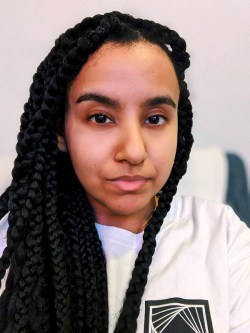 When Elham was 16, her mother passed away following a short battle with a rare form of cancer. Up until that point, she and her mother were inseparable. In an attempt to make it easier on Elham, her mother and extended family hid the illness and it’s severity from her, only ever speaking of hopeful treatments and a good outcome. Although she understands the well-intentioned reasoning for this positive focus, she felt the shock for her was worse when her mother passed, as she was not privy to the true prognosis and genuinely expected her to recover. Elham did not give herself the time or opportunity to address her feelings of shock and grief, instead she stayed in constant motion, throwing herself into school in an attempt to make her mother proud as she pursued her undergraduate degree.
As pressures from school, life, family expectations added to her burden of unprocessed grief, Elham describes reaching a “breaking point” mentally and emotionally. She had to take more than one semester-long break and use the time to recuperate spiritually, financially, mentally, and academically. She spent those breaks taking many steps backwards and forwards: she returned to her studies on a part-time basis, worked a lot, volunteered her time in ways that would strengthen her interests in visual art, education, and communication, as well as honouring her mother by bringing kindness and caring to these activities
Elham sought out the help of a therapist, whom she began to see regularly. She describes this as a turning point for her. She learned how to put words to the emotions she had avoided feeling surrounding her loss. She describes unpacking her grief with her therapist as a process of “confusion and weirdness” that eventually helped her to see the importance of processing these very natural feelings. She feels that making the decision for herself to seek out therapy, at a time that she was ready for it, was an important step in developing her resilience.
After taking time to heal and through much self-exploration that resulted in a change of focus academically, Elham returned to her full-time studies with a renewed sense of academic and career-minded success. She is committed to staying aware of her own mental health and continues to seek support as she needs it.
Elham received a scholarship to support her studies to complete her Bachelor of Arts degree double majoring in Art History and English.
Sydney H.
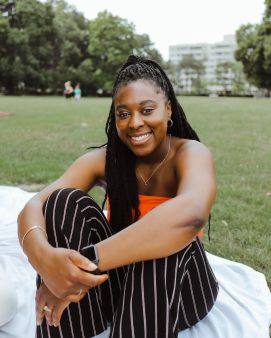 Growing up, Sydney was very high achieving, excelling as both a student and an athlete. Her mother, Marlene, was her role model and supported her dedication and achievements. Beautiful, funny, and caring, Sydney’s mother was her number one supporter and raised her to have a solid work ethic, treat everyone with kindness and respect, and enjoy life to the fullest.
In 2013, Marlene was diagnosed with terminal stomach cancer. All of a sudden, Sydney’s world revolved around hospital visits, filling prescriptions, and taking care of her mother, who passed away in 2014. The absence Sydney’s mom left in her life was felt daily, in everyday small activities. She began to feel emotionally detached from everyone and everything. Accomplishments didn’t matter anymore. She distanced herself from friends and family, and avoided being home, as it reminded her of her mom’s absence.
Sydney began her undergraduate studies at McMaster University, where she felt she began to address and process her grief. Her grief journey led her to embracing self-love and self-acceptance, finding gratitude and appreciating the positive things in her life, all of which helped her to heal. She put her focus on the effort she made in her studies, athletics and community involvement, balancing that with an awareness of her emotional needs. As she deepened this relationship with herself, she also strengthened relationships with her father, sister and extended family by both giving and receiving support. She feels this honours her mother and Sydney knows that she continues to make her mother proud.
Sydney received a scholarship to support her studies at Yale University in the Masters of Public Health program.
2020 Recipients
Faith W.
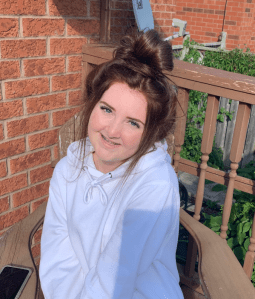
When Faith was only four years old, her father passed from cancer. Faith describes the impact of the loss and how the vast part of her childhood memories don’t include her Dad’s physical presence. The missed opportunities of the role her dad would and should have played in her life growing up is a reality that will often arise when she is not expecting or prepared for it. She has come to know her father’s personality and love through open dialogue with family and friends, and this has allowed Faith to feel his compassionate and loving presence. Faith describes the unique challenge she has faced as she has grown older of guilt feelings that arise from not having her own direct memories of her Dad, yet having grown up feeling his absence in her life so acutely.
Born with bilateral cleft lip and palate necessitating a 20-year course of treatment, Faith has undergone multiple surgeries and therapies throughout her life. Due to the effect of these procedures on her physical appearance, she unfortunately experienced bullying. The emotional impact was heavy, yet it encouraged her to develop inner strength. She knows clearly who she is as a person and is dedicated to moving forward based on that positive foundation.
Faith credits her mother with having made her and her sister feel incredibly loved and for keeping her Dad’s memory very much a part of their lives. Faith has internalized this knowledge and her own health challenges to find resilience within herself, motivating her to live a life based on kindness, appreciation of simple pleasures and meaningful relationships.
Faith received a scholarship to support her studies at Ontario Tech University in the Nursing program.
Rebecca Y.
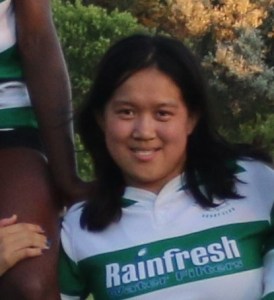
Rebecca describes herself as having a typical life growing up. She attended her local high school, went to rugby practices and enjoyed a stable family environment. This picturesque image changed instantly when her sister suddenly passed away. Rebecca described herself as experiencing a flood of emotions; feelings of anger, grief and hopelessness which she directed at the world, herself and the adults in her life. She expressed that her life came to a “screeching halt”.
Rebecca took the time she needed to work through her emotions. Eventually this time of self healing and acknowledgement of her loss provided her with renewed motivation. “Suddenly, my goals had personal and emotional reasoning, for every late-night studying and early morning in the gym. I wasn’t doing it for just myself but for those who had their lives cut short and for those who had to suffer a loss like I did.” Rebecca expressed that she eventually learned, with the support of her family and those close to her, to embrace change and use her emotions to nurture her passions and goals. She focused on athletics and playing rugby, a sport she loves. She believes this was one way of allowing her sister’s memory to continue to live on as part of her life.
Rebecca’s statement “although on paper, I am back to where I was before I lost her” reflects her realization that self-care and tending to her own mental health are important aspects of healing that don’t necessarily appear on the surface.
Rebecca received a scholarship to support her studies at the University of Ottawa in the Biopharmaceutical Sciences program, where she will also be playing for the University varsity women’s rugby team.
2019 Recipients
Dana M.
 Dana’s father lost his lifelong battle with mental illness when she was only 7 years old. Anyone who has lost a loved one to suicide struggles with complex emotions, and this is only amplified when a child’s mind is forced to grapple with these unanswerable questions. Dana lived with these difficult emotions throughout her childhood and adolescence, eventually developing her depression and anxiety.
During her first year of University, her emotional state and sense of hopelessness escalated to the point that she was unable to fully engage in or enjoy life. Dana bravely asked for and received help, temporarily stepping away from her schooling in order to heal and regain control of her future. She successfully returned to school at Queen’s University, completed her undergraduate degree, and was able to experience what she calls “some of the most joyful and fulfilling years of my life.”
Sadly, Dana experienced another shocking and unexpected loss in January 2019 when her boyfriend Josh passed suddenly. She continues to navigate this fresh grief with the unconditional support of her family, friends and “the love of two incredible men that I will carry with me always.” Dana states, “It may not be perfect, but I have fought very hard for this life, and I will live it fully for those who are with me, for those who can’t be, and most importantly – for myself.”
Dana received a scholarship to support her studies at Ryerson University in the Literature of Modernity Master’s program.
Ross K.
 Ross describes his childhood growing up in Glen Williams as “idyllic”. His parents were supportive and involved in all of his athletic, academic and personal endeavours. When Ross was 11, his dad, Dave, was diagnosed with brain cancer. Ross grew up quickly as the family came together to adapt and support Dave and each other through his illness. 14 months after diagnosis, Dave passed away and Ross describes the “wilderness of grief” that ensued. During this time, his strong relationships, particularly with his mom and his two sisters, grew and deepened even further. Ross states, “I am most proud of what we have faced together, staring adversity and grief in the face.”
Ross felt motivated by his parents’ support and rejoined the activities he loves, excelling in academics, athletics and stage productions. He says, “I know I have made both of my parents proud.”
Ross received a scholarship to support his studies in the Commerce program at Dalhousie University.
Meghan O.
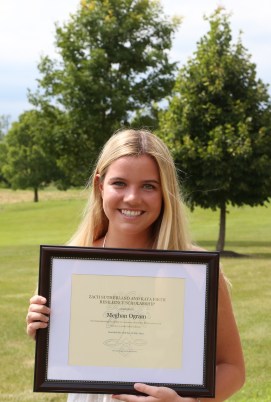 Meghan describes her family growing up as “strong, loving and seemingly unbreakable”. In 2014, her older brother Taylor passed suddenly as a result of a snowboarding accident and her family was catapulted into very individual paths through their grief. Meghan very honestly states “our grieving process was spent adjusting and learning each other’s way of coping with the loss of Taylor. We all shared the same terrible loss but we each seemed to have very different ways of managing it.”
Meghan made a series of difficult choices, including changing schools in grade 10 and evolving in her thinking from not wanting anything to change to choosing to live in honour of Taylor and “encompass some of his incredible qualities.” As she was focusing on establishing goals for herself, she had a series of losses of other members of her extended family. She states, “these wonderful people wanted the world for me and now I want to experience the world for them.” She chooses to live her life with kindness, seeing the best in people and giving the gift of her full presence to her encounters with others. These qualities as well as making an effort to bring people together show the impact Taylor’s life has had on her choice to be resilient.
Meghan received a scholarship to support her studies in the Medical Radiation Sciences program at McMaster University.
Maddison D.
 Maddison grew up admiring her dad, his contagious smile, easy humour and his gift with horses. Sadly, when Maddison was only 12 years old, her Dad passed away unexpectedly. She expresses gratitude for the outpouring of love and support for herself, her brother and her Mom as they dealt with the shock and disbelief that accompanied their grief. What really marked this time for Maddison was the lack of resources available for young people experiencing grief. She and her dad shared a love of horses, and she found spending time with horses a good way for her to begin to process her own grief. As she explored what grief upports and strategies are out there specifically for young people, she discovered that they do exist but aren’t necessarily readily available. As she accessed these resources herself, she felt a desire to help others in similar situations. She chose to do a semester long school project on researching early grief resources for young people and created a “grief kit” to be made available through her school.
Maddison also began volunteering at horseback riding classes for people with disabilities, honouring her father’s memory while giving back to the community. She states “living daily life and seeing milestones go by without my dad here will never be easy and I have accepted that but I have also made it my goal that I will help others, I will make him proud and he will forever live on through me.”
Maddison received a scholarship to support her studies at the University of Waterloo in the Recreation Therapy program.
2018 Scholarship Recipients
Emily T.
 Emily describes her three brothers as her support system, her whole heart and her world. She recalls how after their home burned down, her mom Cathy rebuilt a new home for them with what Emily describes as her “beautiful mind”. Sadly, the house fire was only the beginning of the adversity Emily was to face in her young life. When Emily was 11, her mom passed from a sudden and devastating infection. Unfortunately, Emily’s dad was unable to adequately care for the children and Emily stepped into this caregiver role, especially for her two younger brothers. Despite her best efforts, the children were removed from their father’s custody and Emily was faced with the reality that she would no longer be living with her brothers.
Emily wrote that “When we lost our mother, we lost warm arms and a kind voice, a contagious smile and our constant blanket of comfort, but most of all we lost the kind of love only an overworked, tired mother can supply”.
Through her teen years, Emily continued to focus on her relationship with her brothers while she worked hard in school and at her job. She learned to accept the love and support of people in her life, who were there for her unconditionally, giving her a place to live, loving her and helping to show her that she is so much more than her life circumstances. She describes her mother’s friends, some family members and her own friends as her “circle that is my rock”, stating “they are there for me through my fears, through my sadness and they share my happiness.”
Emily has been told many times how strong she is, but she herself would rather focus on how happy she is. She wrote “We struggle but we also thrive, and we find the things that make us happy. I live because others cannot and I love because I have people who also love me. And I am happy.”
Emily received a scholarship to support her studies at Lakehead University in the Concurrent Education program.
Alicia M.
 Alicia’s older brother, Jeremy went missing in 2014 while on a canoeing trip in Algonquin park with friends. For two interminable weeks, her family and friends cycled between hope and fear. When they received the news that Jeremy had not survived, Alicia’s initial reaction was to focus on her 11-year old younger sister, who idolized Jeremy. Alicia also focused on her parents and their grief, while unintentionally ignoring her own.
During this time, Alicia was finishing her final year in high school and then starting her freshman year at Seneca College. With the best of intentions and trying to “be strong”, she pushed through and completed her program in 2016. Having experienced so many changes in such a small amount of time, she never allowed herself to process her loss and her own feelings surrounding Jeremy’s death. Eventually this avoidance caught up with her and she found herself unfocused, unmotivated and unable to get a sense of direction for her own life. She began to seek help from both traditional and non-traditional sources and felt that she was starting to “cope”, but not really to heal.
A turning point for Alicia came when she turned 21, the age Jeremy was at the time of his accident. She made the choice to refocus on her herself, her love for Jeremy and her need to find some peace. After having tried to keep her own grief at bay, she was now choosing to face how she truly felt, and this is what began to lead her out of the dark space of deep grief. Believing that she is living and experiencing life for both herself and her brother allows Alicia to find happiness and purpose for herself. She intends to use her own experience to help others as they cope with grief and loss.
Alicia received a scholarship to support her further studies at Seneca College in the Honours Bachelor of Behavioural Psychology program.
Malcolm F.
 Malcolm grew up in a has faced tenuous family situation and as a preschooler was removed from his mother’s custody and placed with his grandparents, who faced struggles of their own. Malcolm continued to have a relationship with his mother and recognized her struggles to the degree that a child could. His mom passed when he was 11, after which time Malcom’s extended family provided initial support but due to their own struggles, placed Malcolm in foster care as a teenager.
Malcolm provides multiple examples from his young life of choosing to accept choices and behaviours from others that he was unable to understand. He somehow saw that turning instead to anger and judgement of them would further impact him in a negative way. In accepting them and their imperfections, he was able to maintain relationships initially with his mom and later with his extended family, despite their inability to house and care for him.
Instead of becoming bitter and resentful, Malcolm chose to continue to make the best of his life circumstances, becoming involved in sports and experiencing teamwork and the support of friends, teachers, coaches and his Social Worker. He has been involved in the Mentor Program at his high school, providing support and listening to younger students who are struggling with various challenges. Malcolm has used his life experience to find resilience within himself and to help others to find their way.
Malcolm has a close relationship with his foster Mom, who has helped him to feel truly cared about. He expresses such genuine gratitude to her and to all the people who have supported him along the way.
Malcolm received a scholarship to support his studies at the University of Windsor and is interested in the field of Social Work.
Eion Campbell Memorial Scholarship


Eion’s Story
Eion’s Dad Kevin passed unexpectedly when Eion was only six. His mother Andrea raised Eion and his older brother Richard to be compassionate young men who knew from a young age what matters most in life. Eion formed enduring and meaningful relationships with those close to him, and cared about how others felt. He was very close with the Sutherland family and a supporter of the Resiliency Foundation from its inception.
When Eion was 16 he was diagnosed with Hodgkins lymphoma. He bravely faced chemo and radiation along with their painful side effects. He was sensitive to the knowledge that his suffering was incredibly difficult for his family and friends to witness. Averse to self-pity, Eion could always be counted on to lighten a heavy moment with a funny comment or one-liner to put others at ease.
Remission meant a return to high school then on to Algonquin college to learn the plumbing trade, where Eion further increased his circle of friends and continued his involvement in sports. He was a genuine listener, accepting of each person’s individual experience and choices, his favourite phrase being “You do you.”
At the age of 20, Eion was diagnosed with leukaemia and once again had to endure months of intensive treatment to battle this disease. Hope for a cure from a stem cell transplant which he received from his mother, was sadly replaced with the news in January of 2018 that his disease had progressed.
Eion faced this news with grace and calm, telling each of his close friends individually and inviting them to join him in a Casino weekend of fun, which he very much enjoyed despite his weakened physical state. Only three days later on January 23, 2018, Eion passed away.
Eion was the essence of resiliency, lived his life true to his genuine nature and has left an indelible mark on the lives he has touched. In honour of Eion, we chose to offer a Resiliency Scholarship in 2018 to someone who had faced difficult personal adversity.
Recipient of the Eion Campbell Memorial Scholarship:
Ruby C.
Ruby suffered childhood sexual abuse, compounded by silence, secrecy and then ineffective justice from the legal system. She did not feel supported in her many encounters with therapists, doctors and counsellors over the years. Ruby’s childhood trauma was reignited during her second year of university when she was experienced recurrent trauma. Once again she accessed the traditional avenues of support, however despite her best efforts, found them ineffective for her once again.
From this low place, Ruby sought out resources that she felt resonated with her own experience and slowly built up her resilience. She “learned the distinction between fault and responsibility and accepted that although what was done to me was not my fault, it was my responsibility to choose recovery.”
Through her determination to heal herself, she has healed and deepened the relationships with those closest to her and has gone on to work closely with her Student Union at Dalhousie to create meaningful supports for students who have experienced sexual or gender-based violence. In future, she hopes to develop and teach workshops on how to use writing, art and personal expression to heal from traumatic experiences. She wrote “I want to help people discover safe space within themselves.”
Ruby eloquently stated, “I will always carry the ghosts of all the broken versions of me, but instead of feeling bound to them as if they can still weigh me down, I carry them with all the lessons they have taught me and as a reminder of all the pain I will never need to feel again, because I am resilient.”
Ruby received a scholarship to support her studies at Dalhousie University in Halifax in the Sociology and Social Anthropology program with a certificate in Disabilities Management.
2017 Scholarship Recipients
Nathan W.
Nathan experienced the loss of both of his parents as well as his beloved grandparents while he was very young. Raised by his loving Aunt, he developed the willingness to recognize and deal directly with all aspects of his grief from the early losses of these important people in his life. He has committed to a lifelong process of personal growth. He acknowledges that the grief process is highly individual and unique to each person and set of circumstances.
 Nathan himself emphasized very eloquently how in telling his story, he is willing to share enough background to give context, but wants to focus on the resiliency, not the tragedy, as that is where healing happens. Despite his losses, Nathan has found purpose and meaning in his own life and a desire to help and support others.
Nathan describes the grief journey as a rollercoaster and feels that being willing to ask for and accept help from family, friends and counsellors that you can trust helps to deal with the inevitable ups and downs. Grief is an individual journey, but is not one that must be travelled alone. He states, “I have learned that to ask for help does not come from being weak, but rather shows that I am strong enough to know I don’t have all the answers myself.” Nathan no longer allows his unfortunate circumstances to define him but rather choses to incorporate his personal growth from his losses in making him the motivated, vibrant young man he is today.
Nathan received a scholarship to support his undergraduate studies at Ryerson University in the Media Production program.
Emily M.
When Emily was just 12 years old, her older brother Aaron died by suicide. She shared a close sibling bond with him and describes him as her role model. Sadly, within 18 months of this tragedy, she also lost both of her grandparents. Despite strong support from her parents, these losses plunged Emily into a state of hopelessness where she was unable to envision a positive future for herself.
 Emily found her resiliency by choosing to “take time to grieve and to have the courage and strength to allow myself to experience painful emotions. I knew that if I wanted to heal from the pain and to stop hiding in a shadow of quiet darkness that I needed to stop running from the sadness.” By allowing herself the time and space to feel her grief, she came to understand “that if I wanted to create meaning for myself amidst my overwhelming sadness I needed to continue to be involved in activities that reflected my values and interests.” Emily believes “one aspect of resiliency is being able to continue living a meaningful life amidst one’s grief by having the courage and strength to be engaged in the community, so sadness is not the only thing that defines you.” By finding ways to engage in life on these new terms while making space for her painful emotions, Emily has given back to her community through volunteer activities, her beautiful writing and speaking presentations. Having the courage to share the story of her grief experience in such an authentic way has already undoubtedly helped others with their own. “I am grateful that I now deeply understand the importance of deliberately making choices to surround myself with kind and caring people and to engage in activities that help others. The pain from the loss of my brother Aaron will always be a part of who I am, but the beauty of resiliency is that I have learned to find peace in my sadness.”
Emily received a scholarship to support her undergraduate studies in Biology at the University of Guelph.
Emily has found great healing through writing and has her own blog in which she openly and generously shares her grief journey. Visit Emily’s blog https://growingthroughgrief.weebly.com/
 Choose 2 Be Resilient